UAE rain chances extend through Saturday, with dusty winds and highs of 40°C
Rain is possible in parts of the UAE on Tuesday as developing clouds bring gusty, dust-raising winds, according to the National Centre of Meteorology (NCM). Inland temperatures could reach 40°C, while the unsettled spell may continue through Saturday.
 Omar Al Nuaimi
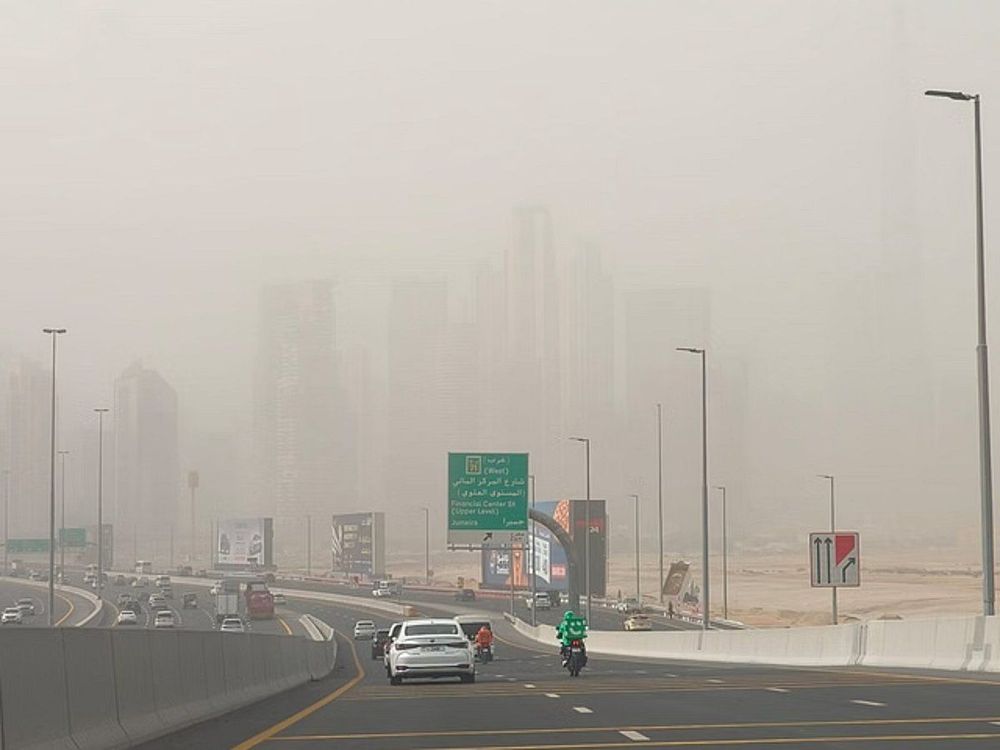
Tuesday's forecast and visibility risks
The NCM expects generally fair to partly cloudy skies, with a chance of rain from convective clouds over the north, east and south. Winds of 10 to 25 km/h will strengthen at times around cloud activity, potentially reaching 45 km/h inland and 40 km/h in the mountains and lifting dust.
Forecast temperatures are 35°C to 40°C inland, 33°C to 37°C along the coast and on islands, and 26°C to 32°C in the mountains.
Some coastal and inland locations could see fog or mist as humidity rises overnight into Wednesday. Seas in the Arabian Gulf will be slight, becoming moderate at times; the Oman Sea is expected to remain slight.
The NCM urged residents to take care when visibility worsens and stay away from dangerous areas, especially near mountains. Downdrafts associated with developing clouds can lift sand and dust, reducing visibility particularly in open areas.
Rain chances later in the week
Wednesday's rain chances center on northern and eastern areas, where convective clouds may form. Winds could reach 50 km/h and raise dust. On Thursday, rain remains possible in the east and south, with wind speeds reaching 45 km/h.
The focus shifts mainly to eastern areas on Friday, when rain-bearing clouds are expected. Further rain is possible in both the east and north on Saturday.
Nights are forecast to remain humid through much of the period. Some coastal and inland areas, particularly in the west, could experience mist or fog.
Low pressure during the autumn transition
The NCM linked the forecast to a surface low-pressure extension accompanied by a weak low-pressure system higher in the atmosphere.
Explaining October's unsettled conditions to Khaleej Times, NCM meteorologist Dr. Ahmed Habib said low-pressure extensions from the Arabian Sea and the southwest were adding moisture to the atmosphere. Convective clouds were expected to form first in the eastern UAE, then spread inland.
Habib described rapid shifts between stable and unstable weather as typical of the UAE's autumn transition. Nighttime humidity increases, especially near the coast, and localized fog are also features of the season.
The current heat follows an earlier seasonal decline: UAE temperatures fell by about four to five degrees Celsius between late September and the first week of October 2026. Some inland and mountain stations recorded 20°C or less. Even so, Habib said that year's readings were slightly above the average for the time of year.
How cloud seeding works
Convective clouds are also the focus of the NCM's cloud-seeding program. The technique aims to increase rain from clouds that already exist, not produce new clouds. Aircraft fitted for the work disperse tiny natural salt particles into suitable convective clouds.
The NCM does not seed stratiform clouds. It says its targeting of suitable convective clouds, rather than stratiform clouds present elsewhere, helps explain why rainfall intensity can differ substantially between locations.
According to the NCM, the UAE had completed 110 cloud-seeding missions in 2026 as of August 1. Operations take place year-round whenever suitable clouds develop.