Rescuers recover four bodies on Pakistan's Broad Peak as search continues for six other climbers
Four of the 10 climbers missing after an avalanche on Broad Peak have been found, while bad weather hampers the hunt for the rest. The expedition was led by renowned mountaineer Nirmal Purja, and his company later confirmed that he had died.
 Mariam Al Mansoori
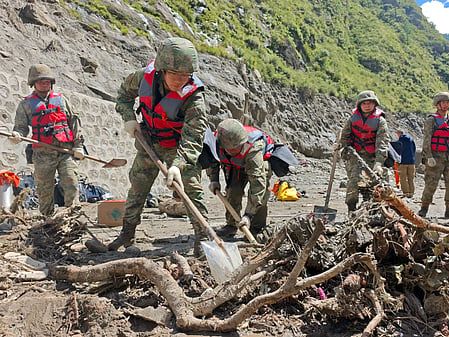
Rescuers searching for 10 climbers missing after an avalanche on Pakistan's Broad Peak located four bodies on Friday. They were still looking for the other six despite bad weather that hampered helicopter flights, officials said.
Senior government officials, who spoke on condition of anonymity because they were not authorized to brief the media, said efforts were under way to retrieve the four bodies despite the harsh conditions. They did not immediately say which climbers had been found. Gilgit-Baltistan Chief Minister Amjad Hussain said in a statement that bad weather continued to hamper the rescue effort.
Contact lost after the avalanche
The climbers lost contact with their base camp after an avalanche struck while they were attempting to scale the mountain, said Karrar Haidri, vice president of the Alpine Club of Pakistan.
"The team has been out of communication since Thursday,"
he said, adding that army helicopters were part of the search-and-rescue operation.
The Alpine Club said the avalanche hit around midday on Thursday, July 30. Tracker data from the climbers indicated the group was at around 6,600 meters, between Camp 2 and Camp 3, when it struck. That location was inferred from tracking information and has not been officially confirmed by the authorities.
Who was on the expedition
According to the Alpine Club, the expedition comprised five Nepali climbers, Pakistani mountaineer Sohail Sakhi, Omani climber Nathira, American climber Mallory Geis, a Chinese climber identified only as Wang, and another foreign climber. Later reports gave fuller names for some of them, including Nadhira Al Harthy from Oman, Wang Zhong from China and Sarah Mallory Geis from the United States. Sakhi was 33.
China's government said on Friday that it was trying to verify whether any of its nationals were among the missing.
"We will provide assistance to Chinese citizens in need and are also willing to offer help in accordance with the needs of the Pakistani side,"
Foreign Ministry spokesperson Mao Ning said in Beijing.
The expedition leader was Nirmal Purja, a Nepal-born former soldier in the British army who is widely known as Nims Dai. In 2019 he climbed the world's 14 highest peaks in a record 189 days, an achievement featured in the Netflix documentary "14 Peaks: Nothing is Impossible." That record was surpassed in 2023, when Norway's Kristin Harila and Nepal's Tenjen (Lama) Sherpa completed the 14 peaks in 92 days. Purja still holds the record for climbing all 14 without supplementary oxygen. He had summited Broad Peak before, on July 26, 2019, during a push on five of Pakistan's eight-thousanders.
Moving Mountains, a Pakistan-based travel company, announced late last month that the team was heading to the small town of Askole, the usual starting point for expeditions in the area, and wished them a safe climb. The company said it was Geis' first attempt at an 8,000-meter peak in Pakistan, while Sakhi was expected to make his last. Sakhi is a guide for the company as well as a geographer and high-altitude photographer, and has climbed some of the world's major peaks, according to its website.
Geis, 39, lives in San Antonio. She announced on social media earlier this year that she was closing her Pilates studio to take
"a giant leap of faith into the unknown to see where life goes. I have a sneaking suspicion there will be lots of helmets, harnesses, and crampons involved."
Later confirmation of deaths
Subsequent reports established the outcome. On Saturday, August 1, Purja's expedition company, Elite Exped, confirmed that he had died, and all 10 climbers caught in the avalanche were reported dead. Purja was 43. Nepal's Prime Minister Balendra Shah said he was stunned by the deaths. Among the Nepali guides named in reports were Pur Bahadur "Yukta" Gurung, Kili Pemba Sherpa, Gyalu Sherpa, Nima Sherpa and Nawang Thindu Sherpa.
Outside magazine described the avalanche as the deadliest high-alpine avalanche in more than a decade. Reports said the climbers set out during a narrow weather window, after earlier climbers had left because of heavy snow and rising avalanche danger.
About Broad Peak
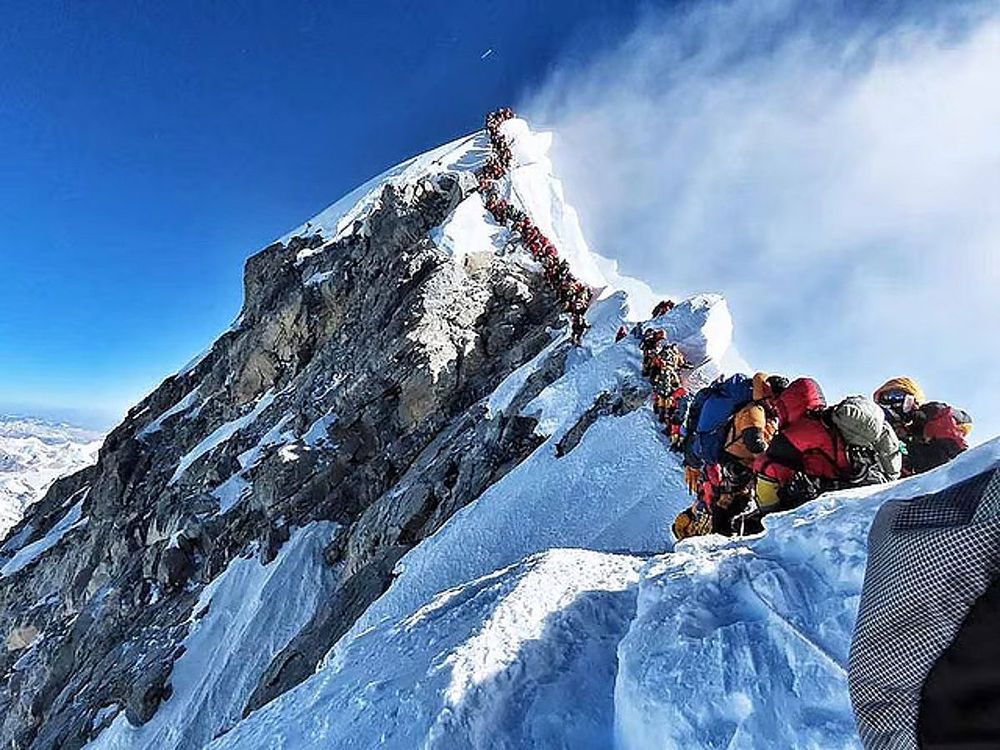
Broad Peak, at 8,047 meters (26,401 feet) by the figure used in older surveys, is the world's 12th-highest mountain; more recent maps list it at 8,051 meters (26,414 feet). It lies in Pakistan's Karakoram range, across the Godwin-Austen Glacier from K2, and is one of five peaks above 8,000 meters in Pakistan. Four of them, K2, Gasherbrum I, Broad Peak and Gasherbrum II, are in the Karakoram, while Nanga Parbat is in the Himalaya. The mountains attract climbers from around the globe.
Four Austrians, Marcus Schmuck, Fritz Wintersteller, Kurt Diemberger and Hermann Buhl, made the first ascent in June 1957, without supplementary oxygen or high-altitude porters. Buhl died on nearby Chogolisa 18 days later.
Accidents are common during climbing expeditions in northern Pakistan because of avalanches and rapidly changing weather.