Taiz siege deepens humanitarian crisis as global diesel shortage set to persist into 2027
About 800,000 people in Yemen's Taiz face severe shortages of food and fuel as fighting intensifies, while the International Energy Agency warns diesel supply disruptions will continue well into next year.
 Mariam Al Mansoori
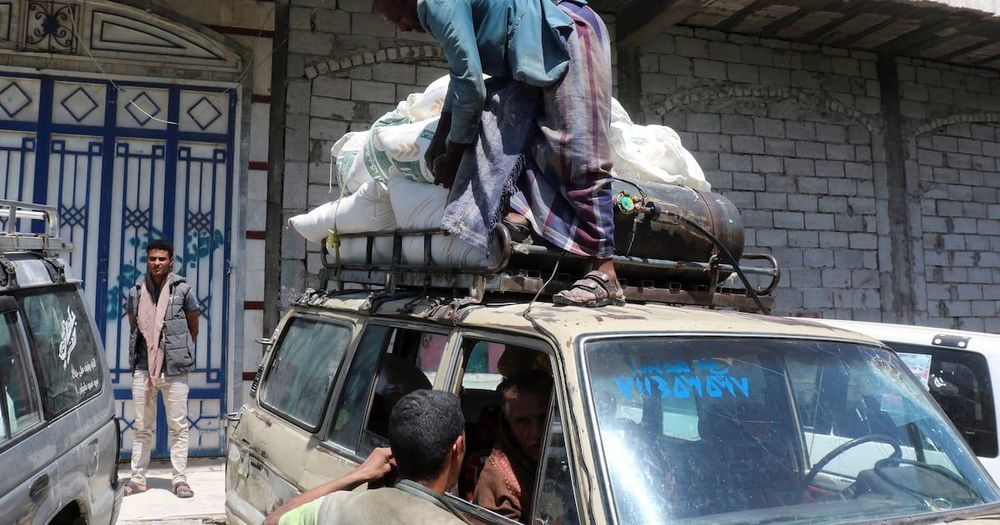
War cuts off 800,000 in Taiz
Yemen's third-largest city finds itself in the grip of a worsening humanitarian emergency as approximately 800,000 residents of Taiz remain largely isolated from essential supplies. The situation has deteriorated sharply following renewed clashes between government forces and Houthi rebels, leaving the city's population without reliable access to food, fuel and medical resources.
The crisis in Taiz, located in the Yemeni highlands near the Red Sea port city of Mocha at an elevation of about 1,400 metres, represents an escalation of a siege that began in 2015. In early October, Houthi forces seized control of the last main road connecting Taiz to other government-held territories, making the current blockade more comprehensive than previous sieges.
The immediate impact has been severe. Wheat and flour supplies could be exhausted within three weeks, while food prices have surged approximately 50 percent since the escalation began. The crisis builds upon already dire conditions, with ten out of 16 districts in Taiz governorate classified at emergency levels of food insecurity even before the latest fighting intensified.
The humanitarian situation extends beyond Taiz. Since August, approximately 200,000 people have been displaced across Yemen, accompanied by a sharp increase in cholera transmission. Health officials have also reported more than 22,800 suspected measles cases this year, resulting in 128 deaths.
Global diesel crisis to persist
The International Energy Agency has issued a stark warning that global diesel shortages will continue well into 2027, driven by ongoing disruptions from the Iran conflict. Wholesale diesel prices reached unprecedented levels of approximately $220 per barrel in Europe and the United States in September, nearly double crude oil benchmarks and prewar levels.
The supply crisis stems from dramatic reductions in exports from key producing regions. Combined diesel and gas oil exports from the Middle East and Russia plummeted by 1.3 million barrels per day in September, representing a loss exceeding 60 percent compared to pre-conflict levels.
The shortage has depleted global stockpiles to historically low levels. US diesel inventories ended September at a 14-year seasonal low, while European commercial gas oil reserves fell to their lowest point in 25 years in July.
Lebanon's electricity crisis deepens
Lebanon's power sector has undergone a fundamental transformation, with private generators now supplying half of the country's electricity at the beginning of this year. The state utility Électricité du Liban provided only 31 percent of supply, according to the Lebanese Centre for Energy Conservation.
A special investigation has revealed how politically connected businesses are profiting from the country's electricity crisis, leaving households struggling with escalating bills as they rely increasingly on private suppliers.
Gaza reconstruction agreement signed
The Palestinian committee established to administer Gaza has signed an agreement with Germany's development agency, GIZ, to support reconstruction efforts. The committee, led by former Palestinian Minister Ali Shaath, operates temporarily from Cairo and falls under the oversight of the Board of Peace, chaired by President Trump with up to 35 member states, though no other G7 countries have joined.
Despite the agreement, Israeli authorities continue to block the committee's entry into Gaza, complicating reconstruction planning and implementation.
UAE launches AI competition
The United Arab Emirates has announced a $1 million prize for a global competition focused on developing agentic artificial intelligence solutions designed to improve everyday life. The initiative seeks to advance AI applications that can operate autonomously to solve practical problems and enhance quality of life for users worldwide.