Dense fog triggers 80km/h speed restrictions on major Abu Dhabi roads
Abu Dhabi Police activated temporary speed limits across multiple highways early Saturday as thick fog reduced visibility to near zero in coastal and inland areas, with warnings in effect until 8.30am.
 Omar Al Nuaimi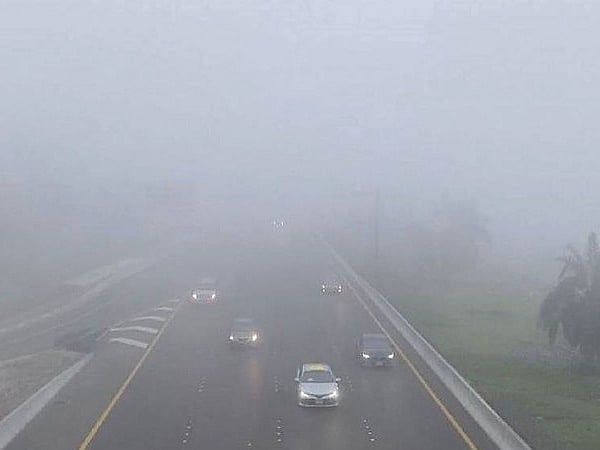
Dense fog triggers 80km/h speed restrictions on major Abu Dhabi roads
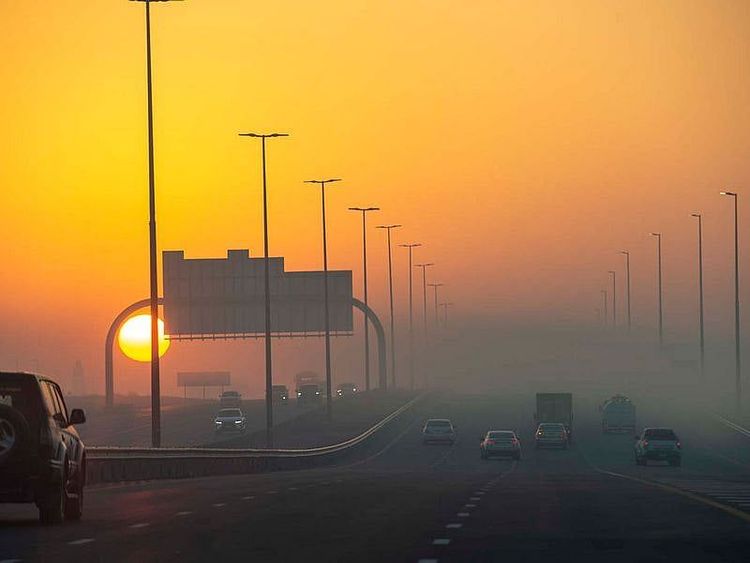
Dense fog blanketed parts of the UAE on Saturday morning, prompting Abu Dhabi Police to slash speed limits to 80km/h on a series of major highways as visibility plunged to dangerous levels across the emirate.
The National Centre of Meteorology issued a fog alert covering coastal and inland areas from 11pm Friday until 8.30am Saturday, warning that horizontal visibility could deteriorate significantly and become virtually zero at times.
Abu Dhabi Police issued repeated alerts through the early hours, urging motorists to exercise caution and follow the temporary speed limits displayed on electronic information boards. Police use weather reports, fog sensors installed on smart gates that estimate visibility range, and reports from police patrols to decide when to implement the restrictions.
The 80km/h speed restriction was activated on sections of the Abu Dhabi-Al Ain Road, including between Al Wathbah and Al Faya and between Al Khaznah and Al Rimah. Restrictions were also introduced on Al Taff Road, including stretches between Sweihan and Al Ajban and between Sweihan and Al Saad Bridge.
Police lowered speeds on Umm Az Zumoul Road between Bu Krayyah and Sha'ab Al Ghaf, while restrictions were also announced on Sheikh Maktoum bin Rashid Road between KIZAD and Sih Shuaib. The temporary 80km/h limit was imposed on Mohamed Al Falahi Al Yasi Road between Al Mirfa and Zayed City, and on Sheikha Salama bint Butti Road between Sheikh Khalifa bin Zayed International Road and Zayed City.
Several sections of Sweihan Road were also affected, including the stretch between Al Hayer and Sweihan City Roundabout, and between Al Faya Bridge and Sweihan City Roundabout. Police also announced reduced speeds on Sheikh Mohammed bin Rashid Road between KIZAD and Seih Shuaib, and on Al Fayah Road between Al Haffar and Seih Shuaib.
Variable speed limit system
The restrictions form part of Abu Dhabi's variable speed system, introduced in early 2019, under which speed limits are temporarily lowered during fog and other conditions that reduce visibility. During poor visibility conditions, speed limits are officially changed to 80km/h on motorways, and violators face fines if they exceed the displayed limits on electronic signs.
Motorists must follow the limits shown on electronic information boards while the restrictions are in force. Abu Dhabi Police urged drivers to keep a safe distance from other vehicles, avoid sudden manoeuvres and remain alert to changing speed limits during periods of poor visibility.
Seasonal fog patterns
The fog follows a forecast of high overnight humidity across some coastal and inland areas of the UAE. Radiation fog accounts for around 95 percent of all fog recorded in the UAE. It forms when warm, moisture-laden air from the Arabian Gulf moves inland in the evening and the desert surface loses heat rapidly after sunset through radiative cooling.
Research from Abu Dhabi International Airport shows that a light breeze of roughly five knots actually helps radiation fog form and settle, while stronger winds tend to break it apart before it can thicken.
The UAE has averaged 132 days of fog formation per year since records began in 2006, with fog events most frequent between September to March with a peak during December and January. Abu Dhabi International Airport records show an average of just under 24 fog days per year, ranging from eight to 51 fog days annually.
The NCM uses a colour-coded alert system for fog warnings: yellow alerts call for awareness and careful driving, orange signals a need for higher preparedness, and red marks conditions of extreme danger. These alerts are pushed directly to residents' phones through the National Early Warning System coordinated with NCEMA.
The NCM has said humid nights and early mornings could continue to bring a chance of fog or mist over the coming days. Research from Khalifa University found that climate change has led to an increase in multi-day fog events in the UAE, as the Arabian Peninsula is warming faster than the global average, with warmer surrounding seas increasing moisture available in the lower atmosphere.
Safety concerns
The speed restrictions underscore the serious safety hazards that dense fog can create on UAE roads. In a notable incident on March 14, 2019, 68 vehicles collided in separate accidents on Abu Dhabi roads when visibility dropped to 200 metres across Dubai, Abu Dhabi, Sharjah and Ras Al Khaimah. One person was killed and at least 10 were injured in the series of crashes.
The Integrated Transport Centre recently activated a variable speed limit system on Sheikh Zayed bin Sultan Road starting October 27, 2025, which adjusts speeds in real time to match weather, traffic, and road conditions, expanding the use of this technology beyond fog-specific applications.