Sabic posts $133 million third-quarter profit as revenue rebounds
Saudi Basic Industries Corporation returned to profitability in the third quarter of 2026, reporting 500 million Saudi riyals ($133 million) in net income attributable to shareholders. Higher selling prices and improved results from investments helped the petrochemicals company recover from a second-quarter loss, although revenue remained below its year-earlier level.
 Omar Al Nuaimi
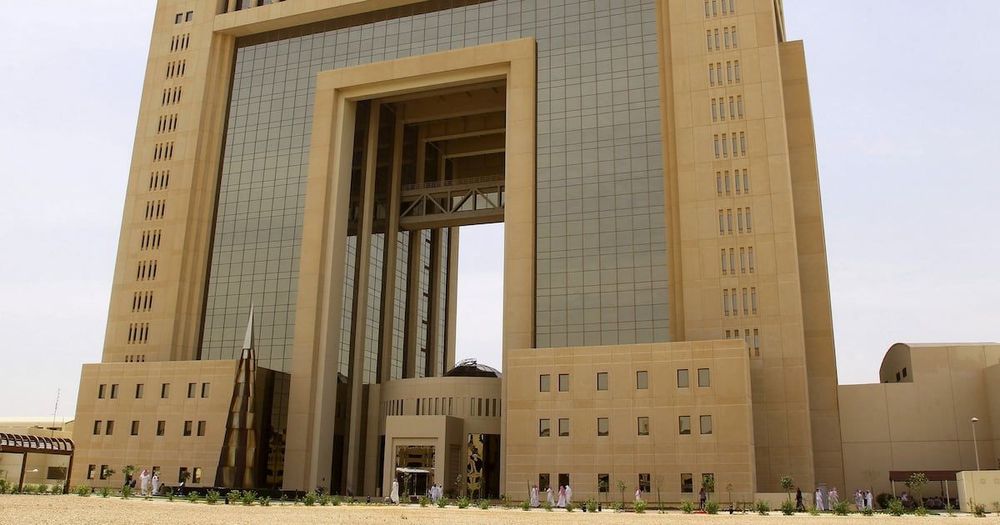
Revenue and investment gains support recovery
Sabic, the Middle East's largest petrochemicals company, reported the results in a stock exchange filing on Sunday. Its July-September net profit was 16.3 percent higher than a year earlier, following an 833 million riyal loss in the second quarter that the company attributed to the regional conflict.
Third-quarter revenue totaled 28.17 billion riyals, a 14 percent increase from the preceding quarter but about 3 percent below the same period in 2025. Adjusted earnings before interest, taxes, depreciation and amortization (EBITDA) rose 40 percent sequentially to 4.75 billion riyals. Adjusted net income also turned positive, reaching 840 million riyals after a second-quarter loss of 380 million riyals.
In its explanation of the profit, Sabic cited a 575 million riyal increase in gross profit, supported by higher selling prices. Results from non-integrated joint ventures and associates improved by 1.62 billion riyals, largely because rising share prices allowed the reversal of impairment losses on listed equity investments in Europe.
Several items partly offset those gains. Supply-chain challenges pushed selling and distribution expenses up by 916 million riyals, while net financial results declined by 358 million riyals. The company also recognized a 985 million riyal loss from discontinued operations after completing its engineering thermoplastics sale, as foreign currency translation amounts were reclassified from equity to the income statement.
Chief executive Faisal M Alfaqeer said Sabic "demonstrated exceptional resilience, despite geopolitical developments and market headwinds" during the quarter. He said portfolio optimization, transformation and selective growth remained priorities for supporting long-term profitability and shareholder value.
Thermoplastics business moves to Mutares
The engineering thermoplastics transaction covered Sabic's operations in the Americas and Europe and carried an enterprise value of $450 million. Sabic said the disposal was part of its effort to streamline operations and improve long-term profitability.
German holding company Mutares SE & Co. KGaA completed the acquisition on August 4, 2026. Mutares called it the largest transaction in its history and said it established a new "Chemicals & Materials" segment. The acquired business is to operate as NexPoint Materials.
According to Mutares, the business employs about 2,800 full-time workers, operates eight production facilities across the Americas and Europe, and generates approximately $2.5 billion in revenue. The buyer describes it as the world's second-largest polycarbonate producer, the leading US producer of ABS and the only US producer of PBT.
Alongside the portfolio changes, Sabic said its transformation program had delivered 3.56 billion riyals in recurring EBITDA benefits toward an 11.3 billion riyal target for 2030.
Nine-month loss narrows despite lower revenue
For January through September, Sabic reported a net loss of 320 million riyals, compared with a 4.84 billion riyal loss a year earlier. Revenue for the nine months fell nearly 11 percent to 79.13 billion riyals.
Sabic attributed the smaller loss mainly to a 3.07 billion riyal reduction in losses from discontinued operations and a 2.43 billion riyal improvement in results from non-integrated joint ventures and associates. The discontinued-operations comparison reflected provisions and impairment charges recorded a year earlier in connection with the closure of the cracker unit at the Teesside plant in the UK.
The comparison also reflected 1.07 billion riyals in nonrecurring costs booked in the first quarter of 2025 for a strategic restructuring initiative.
Attacks heighten risks to energy infrastructure
The earnings report follows repeated missile and drone attacks on Saudi oil and petrochemical infrastructure as the regional conflict widens. Sabic has a substantial presence in Dhahran, principally through its advanced research and innovation activities.
A Houthi missile strike earlier in October damaged Saudi Aramco's headquarters complex in Dhahran, setting an administrative building on fire. Aramco holds a 70 percent stake in Sabic.
The attacks have renewed concerns over the security of Saudi Arabia's energy infrastructure while the Iran war continues to disrupt regional energy markets.
Affiliate approves Jubail fertilizer project
Separately, Sabic affiliate Sabic Agri-Nutrients said its board made the final investment decision on September 9, 2026, for San VII, its seventh project, in Jubail Industrial City. It awarded Samsung E&A Co. Ltd the engineering, procurement and construction contract at a total cost of about $3.465 billion.
The planned complex includes an ammonia plant with annual capacity of 1.2 million metric tons, two urea plants with combined annual capacity of 2.6 million metric tons, and a post-combustion carbon capture unit. Sabic Agri-Nutrients expects the development to increase its annual urea capacity by about 54 percent, from 4.8 million to 7.4 million metric tons.
Construction is expected to begin in the fourth quarter of 2026. Commissioning is scheduled for the third quarter of 2030, followed by commercial production and project completion in the fourth quarter of that year.