India's Gen Z transforms exam leak protests into viral meme phenomenon
As Delhi's streets fill with demonstrators demanding education reform, India's youth-led Cockroach Janta Party has turned political protest into internet culture, weaponising memes, Bollywood edits and viral reels alongside traditional marches.
How India's Gen Z turned exam protests into a viral meme movement
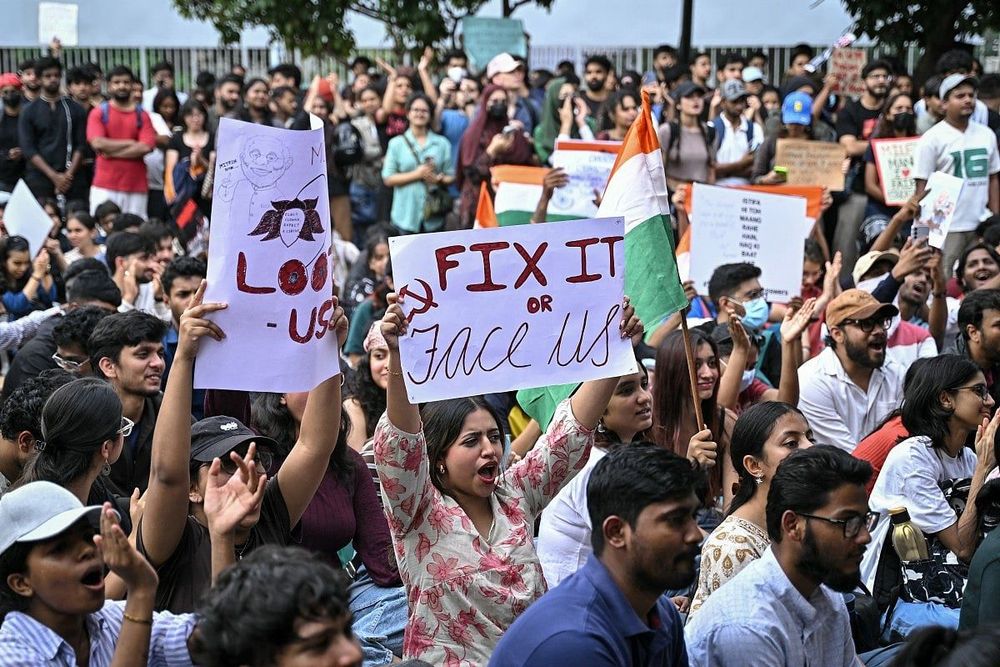
India's Gen Z protesters have unleashed a digital rebellion that blurs the line between political demonstration and internet phenomenon. The month-long protests led by the Cockroach Janta Party at Delhi's Jantar Mantar have become as much a meme factory as a movement, with every police chase spawning viral reels and every march generating savage social media commentary.
The demonstrations, which demand Education Minister Dharmendra Pradhan's resignation over repeated examination paper leaks, have transformed how India's youth express dissent. When riot police baton-charged protesters attempting to march towards Parliament on 20 July, the internet responded not with outrage alone, but with creativity.
Footage of students fleeing teargas was immediately edited into Subway Surfers-style obstacle course videos. Bollywood soundtracks provided the backdrop: some protesters ran to Chak De India, others to Bhaag Milkha Bhaag, but the internet's favourite was the gloriously apt Bhaag DK Bose, whose repeated chorus of "bhaag"—run—seemed scripted for the moment.
From satire to mass movement
The Cockroach Janta Party began on 16 May as a satirical response after Chief Justice Surya Kant made controversial remarks during a Supreme Court hearing on senior advocate designations and fraudulent professional credentials. Within days, the movement gained over 350,000 sign-ups and reached nearly 22 million Instagram followers—more than double the ruling BJP's follower count.
The movement's founder, 30-year-old political communications strategist Abhijeet Dipke, never expected the joke to evolve into India's largest youth-led challenge to the government in years. When authorities banned the party's first X account citing "threats to national security", Dipke created another with the defiant response: "Cockroaches don't die."
The first offline protest began on 6 June at Jantar Mantar, just three weeks after the party's founding, marking a rapid transition from online satire to physical demonstrations.
Why exam leaks matter
The protests centre on the National Eligibility cum Entrance Test, India's highly competitive medical college entrance examination. Over 2.3 million students appeared for NEET in 2024, competing for approximately 129,600 medical seats across 824 colleges—an acceptance rate of roughly 5 to 6 per cent.
NEET and its predecessor AIPMT have faced at least five major paper leak controversies since 2015, including the 2015 AIPMT Bluetooth scam, 2016 NEET Phase II leak, 2021 Rajasthan leak, 2024 Bihar paper leak, and the 2026 case. In 2024, Parliament passed the Public Examinations (Prevention of Unfair Means) Act, introducing prison terms of up to 10 years and fines of up to Rs 1 crore for organised paper leak rackets.
More than 2.2 million aspiring medical students were forced to sit a fresh examination under tight security last month after the original test was scrapped following a question paper leak.
Memes as political weapons
Demonstrators proudly posted fitness app screenshots showing kilometres clocked while outrunning police, thanking officers for the "surprise cardio session". Getting dressed for protests became "Get Ready With Me: Protest Edition" content, complete with anti-teargas goggles and comfortable trainers.
Politicians became meme templates within minutes. Education Minister Dharmendra Pradhan found himself on a placard with perhaps the protest's most devastating phrase: "Bro is still employed." Another read: "Even my ex hadn't ignored me this much."
Bollywood provided the creative framework. Scenes from the 2023 film Tu Jhoothi Main Makkaar were remixed into political satire, replacing romantic leads with political figures. A lyric about an inattentive lover—"They may be mine, but they never listen to me"—became commentary on students feeling ignored by government.
K-pop fancams featuring CJP leader Abhijeet Dipke, students ducking police batons and protesters charging through barricades replaced polished footage of BTS idols. Even teargas became joke material, with one viral post suggesting Delhi Police stop firing it because the capital's pollution was already severe enough.
The internet crowned one moment the protest's defining meme: a demonstrator calmly picking up a smoking teargas shell and lobbing it back towards police. Social media's verdict: "Real-life Uno Reverse card."
Elevated by an unlikely ally
The movement gained further momentum after support from Sonam Wangchuk, a Ramon Magsaysay Award winner who founded the Students' Educational and Cultural Movement of Ladakh in 1988. Wangchuk, widely believed to have inspired the protagonist in Bollywood film 3 Idiots—though actor Aamir Khan clarified in July that his character was not actually based on Wangchuk—began a hunger strike at Jantar Mantar in support of students' demands.
After 20 days, Wangchuk was taken to hospital by police, sparking further criticism and drawing additional attention to the protests.
Government responds with fast-track courts
Prime Minister Narendra Modi announced on 23 July the establishment of fast-track courts to ensure swift punishment for those involved in examination paper leaks. "Those who try to harm the future of our youth will not be spared," Modi wrote on X.
The announcement marked his first direct comments on the protests. Delhi Police reported 178 people injured in clashes on 20 July, including 118 police personnel and around 60 protesters.
The Cockroach Janta Party has vowed to continue its sit-in until broader reforms are introduced, saying Modi's fast-track courts announcement falls short of their demands for systemic change and ministerial accountability.
Beneath the memes, fancams and jokes sits frustration that refuses to dissipate. Students continue demanding accountability over repeated examination paper leaks, sweeping reforms to India's competitive examination system, and Pradhan's resignation.
The memes may dominate timelines and win algorithms, but for the students behind them, they represent more than punchlines. They are the newest form of protest. Because in 2026, the fastest way to get people talking is not always through a slogan. Sometimes, it is through a meme.