Bengaluru startup uses AI-equipped dogs to detect cancer through breath samples
Dognosis trains sensor-fitted canines to identify cancer from human breath, achieving over 90% accuracy in trials involving seven major cancer types across more than 1,500 participants in Karnataka state.
 Daniel Pereira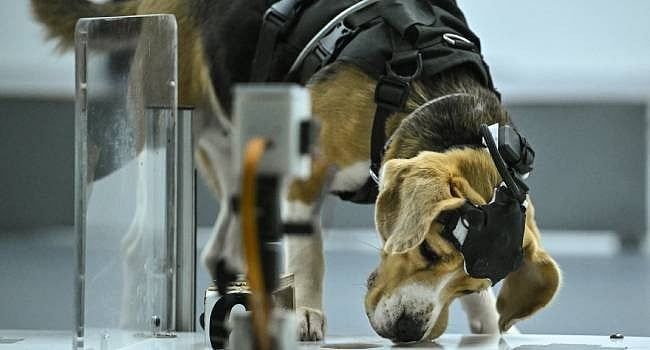
Can dogs sniff cancer? AI joins the hunt in India
On a farm outside Bengaluru, Chloe the rescue dog divides her time between playing on the grass and participating in groundbreaking cancer detection research. Fitted with a 3D-printed helmet and harness packed with sensors, the Labrador mix is part of an experimental programme using canine olfactory abilities and artificial intelligence to develop non-invasive cancer screening.
The Bengaluru-based startup Dognosis is harnessing dogs' extraordinary sense of smell to analyse human breath for cancer indicators. By using AI to track the animals' brain activity, respiration and body language, the company converts their reactions to scent into measurable data. Dogs possess approximately 300 million scent receptors compared to about five million in humans, enabling them to detect distinctive odours created when diseases alter the body's chemical composition.
Chloe is one of 15 dogs being trained by the startup, which has secured backing from venture capital firms including Accel India. The investment firm has backed major Indian technology companies such as Flipkart and Swiggy, and raised its eighth India fund of 650 million dollars in early 2025, bringing its total investment commitment in India to nearly three billion dollars.
Co-founder Akash Kulgod, 26, who studied cognitive science at the University of California, Berkeley, described the customised data-gathering equipment as a doggy Iron Man suit. The canines can complete thousands of sniffs per hour, with each sniff capable of evaluating a sample. The testing process is straightforward: patients breathe into a cotton mask for approximately 10 minutes, which is then sealed in a bag and transported to the laboratory. Patients never meet the dogs directly.
High accuracy rates in initial trials
A recent Dognosis study involving more than 1,500 participants and six hospitals in Karnataka state was published in the Journal of Clinical Oncology. The company reported achieving an accuracy rate exceeding 90 percent across seven major cancer types. International research has demonstrated that dogs can detect cancer with accuracy rates of 96.7 to 97 percent in controlled studies using blood samples, with beagles showing particularly strong performance after eight weeks of training. Scientists have found evidence that canines can identify specific odour signatures associated with colorectal, lung, breast and cervical cancers from various biological samples including breath, urine and blood.
Dognosis plans to launch commercially next year, which would make it the third company of its kind globally, following firms from Germany and Israel. The startup is collaborating with government medical institutions for its research as it pursues commercial approval.
Addressing India's late-stage diagnosis challenge
The initiative addresses a critical public health need in India, where the majority of cancer patients—75 to 80 percent—have advanced disease at Stage 3 or 4 when diagnosed, leading to significantly lower survival rates compared to developed countries. India's five-year breast cancer survival rate stands at 66.1 percent compared to 90 percent in developed nations. Stage 1 breast cancer has approximately 100 percent five-year survival rate, while Stage 3 drops to 72 percent, demonstrating how early detection dramatically improves outcomes.
Cancer diagnostics in India have surged by 32 percent between June 2025 and June 2026, indicating growing awareness and demand for screening. India has described cancer as a major public health concern, with one in nine of its 1.4 billion people likely to develop the disease. The estimated number of cancer cases in India for 2022 was approximately 1.46 million, with projections showing a 12.8 percent increase by 2025.
Dog-based screening could provide an accessible and affordable first layer of detection to be deployed at scale, identifying potential cases for further testing. Santhosh Kumar Devadas, head of oncology at Ramaiah Memorial Hospital in Bengaluru, called the study promising as an early signal but emphasised the need for research with a much larger group before making definitive conclusions. Neelesh Reddy, a senior consultant oncologist at Manipal Hospitals, said only time will tell how the technology will benefit actual patients.
Canine welfare and training methods
Most of the 15 dogs in the programme are beagles, along with some Malinois and Shepherd mixes, brought on board through adoption or legal breeders. Only the best candidates are selected, and each animal is listed individually on the company website as an official sniffer with photographs. Work time is limited to approximately 30 to 45 minutes daily to ensure what Kulgod calls a great work-life balance.
At a facility called Sniffspace, dogs test human samples on platforms equipped with automatic feeders dispensing treats. Co-founder Itamar Bitan, 28, who spent four years in an Israeli special forces canine unit, explained that the dogs are trained using positive reinforcement to detect a specific funky smell for a reward. Some dogs run directly to the feeder expecting rewards, some freeze, and some scratch the sample with excitement. As long as the machine learning system consistently tracks how the dogs react to samples, the specific behaviour pattern is less important than the consistency of their response.