
World Cup 2026: When national identity meets global talent
As the expanded 48-team World Cup unfolds across North America, one striking trend emerges: nearly a quarter of players represent countries where they weren't born, raising questions about modern football identity.
A tournament of historic firsts
Football enthusiasm returns every four years, bringing with it the spectacle of watching elite talents like Messi, Mbappé, Haaland, Ronaldo and Bellingham compete alongside emerging stars such as Lamine Yamal and Endrick on the World Cup stage.
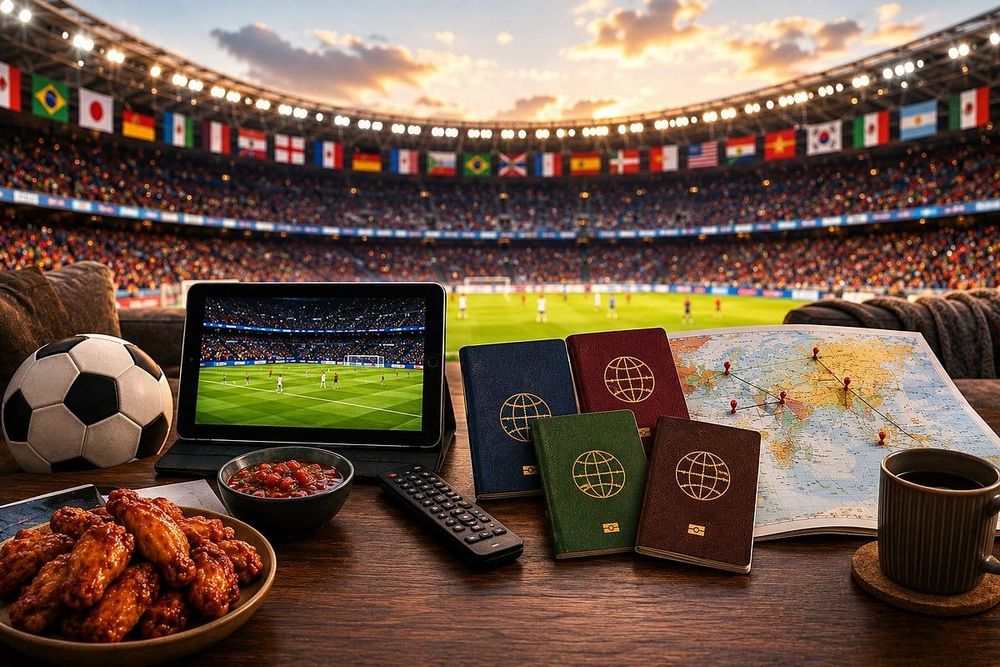
For UAE residents, this tournament presented unique challenges. Broadcasting rights issues forced many to abandon traditional television for digital streaming services. The solution meant flexibility: if someone occupied the TV with Netflix, football could migrate to tablets or phones.
Unlike Qatar 2022, where matches were accessible through short travel, the 2026 edition spans 16 host cities across the USA, Canada and Mexico, covering four time zones. For UAE viewers, this translated to late-night fixtures at 11pm and 2am, making restaurant outings impractical for families. Instead, buffalo wings and tacos found their way into living rooms as the tournament's 104 matches unfolded, nearly double the 64 games of previous editions.
Unprecedented tournament structure
The expanded 48-team format introduces unprecedented elements to World Cup history. For the first time, 32 teams advance from the group stage into a new Round of 32 knockout phase, rather than the traditional 16-team progression. Each subsequent match becomes an elimination event, creating what organisers acknowledge as a particularly demanding tournament structure.
Among the debutants, Curaçao stands out as the smallest nation ever to qualify for a FIFA World Cup, with a population of approximately 156,000. The Caribbean island's historic achievement comes under the guidance of Dick Advocaat, who at 78 became the oldest manager in World Cup history, having previously coached the Netherlands in 1994 and South Korea in 2006.
The global passport phenomenon
One pattern emerges unmistakably across this tournament: the prevalence of players representing nations where they weren't born. The statistics tell a compelling story. A record 23.6 per cent of World Cup participants were not born in the countries they represent, marking the highest proportion in tournament history.
Morocco provides the most dramatic illustration. When they faced Brazil, Morocco fielded 11 players born outside the country, a World Cup first. Their full squad reveals the extent of this approach: of 26 players, between 19 and 20 were born abroad, with only six or seven actually born in Morocco.
Yet Morocco's numbers pale beside Curaçao's composition. The island nation's squad includes 25 players born in the Netherlands, with only forward Tahith Chong born on the island itself. This 96 per cent foreign-born ratio represents the highest percentage among all competing teams.
The contrast between squads proves striking. Japan includes a goalkeeper born in the United States. Meanwhile, powerhouses like Argentina, Brazil and Colombia field entirely native-born rosters, as do relative newcomers including Saudi Arabia, South Africa and Sweden. The Morocco-Brazil match presented an unprecedented contrast: 11 diaspora players facing 11 native-born talents on the same pitch.
The rules behind the trend
This phenomenon operates within established frameworks. FIFA eligibility rules, introduced in 2004, require players to demonstrate a clear connection to any country they represent. This connection can be established through birth in the territory, having a biological parent or grandparent born there, or living continuously in the country for at least five years after turning 18.
These regulations explain how players legally qualify for nations beyond their birthplace, creating pathways that reshape national team compositions worldwide.
As match results accumulate through early mornings, the tournament reveals different priorities among modern footballers. The traditional focus on receiving that decisive pass now competes with a newer ambition: securing the suitable passport that opens doors to international competition.
The 2026 World Cup, with its expanded format and unprecedented diversity of player origins, may be remembered as much for the questions it raises about national identity in global sport as for the goals scored and trophies lifted.