Bollywood's belated solidarity: Why stars' carefully timed posts sparked accusations of token activism
After weeks of silence on India's medical exam scandal affecting 2.2 million students, Bollywood celebrities issued nearly identical statements within hours—prompting fans to question whether their support was genuine or calculated.
Bollywood's belated solidarity: Why stars' carefully timed posts sparked accusations of token activism
For an industry built on crafting narratives and commanding attention, Bollywood's prolonged silence during India's biggest education crisis in years raised uncomfortable questions. When the statements finally arrived on July 22, they came not as isolated expressions but as a coordinated-looking wave—empathetic, carefully worded, and striking in their similarity.
The controversy began on May 3, 2026, when the National Testing Agency conducted the NEET-UG medical entrance examination for over 2.2 million candidates. Within days, allegations of question paper leaks surfaced. By May 11-12, the examination was cancelled entirely. A re-examination was held on June 21, with results declared on July 16—nearly two and a half months of uncertainty for students whose futures hung in the balance.
Throughout this period, as parents spoke of shattered dreams and mounting anxiety, India's biggest film stars remained conspicuously absent from the conversation. The same celebrities who routinely leverage their influence to promote films with social messages offered little public acknowledgment of a crisis affecting millions.
A cascade of carefully calibrated statements
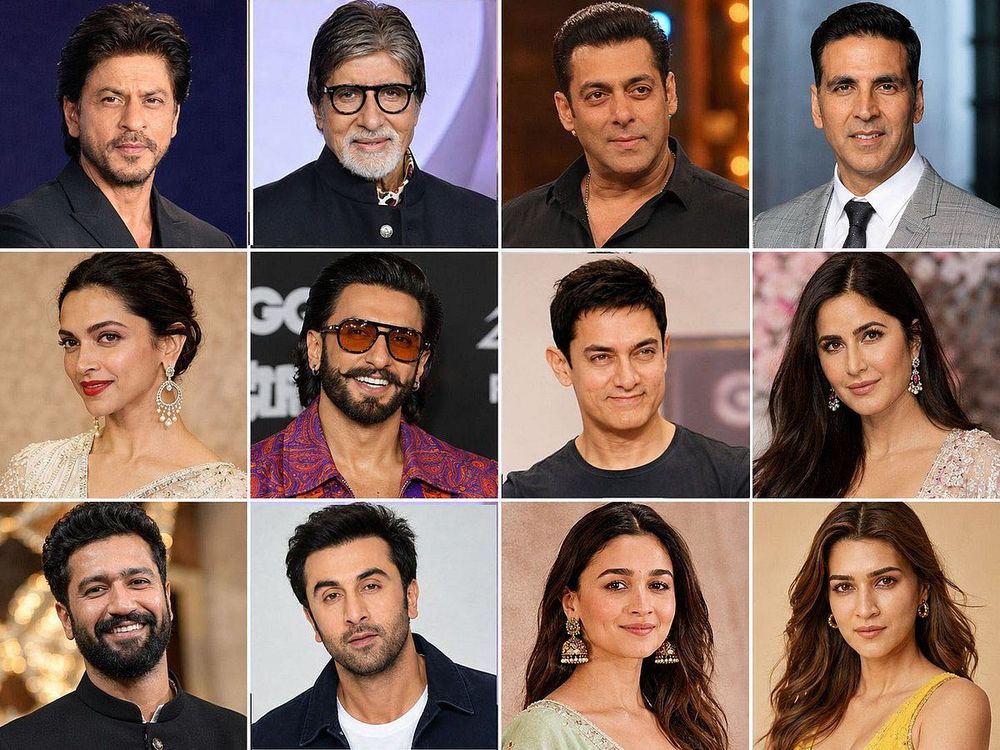
The silence broke on Wednesday night when Salman Khan, one of Hindi cinema's most bankable stars, posted an empathetic message. Within hours, Varun Dhawan, Sara Ali Khan, Nora Fatehi, and Kareena Kapoor followed with statements that shared a remarkably similar emotional blueprint: solidarity with students, appeals for peace, expressions of hope. South Indian icons Mammootty and Kamal Haasan added their voices shortly after.
The timing caught public attention. After more than a month of silence, why did so many prominent figures suddenly find their voice on the same evening? While there is no evidence of coordination, the synchronicity was striking enough to fuel speculation about whether these were genuine expressions of concern or calculated responses to mounting criticism.
The scale of the crisis
The NEET-UG 2026 scandal was no minor administrative hiccup. Approximately 22.79 lakh students appeared for the original examination on May 3, making it one of India's largest entrance tests. The Central Bureau of Investigation arrested 13 people in connection with the alleged leak, uncovering what investigators describe as a multi-state network involving examination officials, coaching teachers, and intermediaries. Some students reportedly paid between 30 to 50 lakh rupees to brokers for advance access to question papers.
India currently has approximately 1.1 to 1.25 lakh MBBS seats across government and private medical colleges, meaning nearly 20 students compete for every medical seat. For many families, NEET represents years of sacrifice and their children's only pathway to a medical career. The examination leak didn't just compromise results—it undermined years of preparation and shattered trust in the system itself.
The opposition Congress party demanded the resignation of Union Education Minister Dharmendra Pradhan and launched a nationwide campaign from June 30, 2024, calling for broader reforms. Political pressure mounted as the controversy transformed from an examination scandal into a broader debate about systemic failures in India's competitive education landscape.
When silence became conspicuous
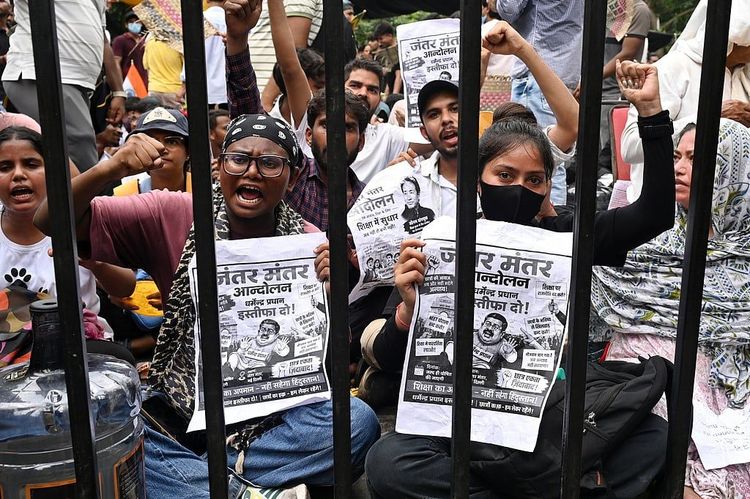
The starkest contrast came from those who spoke early and risked more. Shabana Azmi, a veteran actress who served as a nominated member of India's Rajya Sabha from 1997 to 2003 and received the Padma Shri in 1998 and Padma Bhushan in 2012 for her contributions to arts and social activism, joined student protesters at Delhi's Jantar Mantar in July 2026. Actor Prakash Raj stood alongside her, as did social activist Sonam Wangchuk, who had been observing a 21-day hunger strike. Wangchuk was hospitalized at Safdarjung Hospital on July 18 following Delhi High Court directions after his health deteriorated.
These figures spoke and acted when the issue was politically uncomfortable, before public opinion had crystallized. They didn't wait for the conversation to become safer or for a critical mass of voices to provide cover. Whether one agrees with their positions is beside the point—they demonstrated a form of engagement that carried genuine risk.
Sonakshi Sinha also voiced support early, joining a small group who used their platforms before doing so became the expected norm.
The cost of calculated compassion
This controversy occurred against a backdrop of recurring examination scandals. In 2024, the Supreme Court of India ruled on an earlier NEET controversy, stating there were no indications of an overall systemic failure in the 2024 exam, though it acknowledged breaches at some centers. Parliament subsequently passed the Public Examinations (Prevention of Unfair Means) Act, 2024, introducing prison terms of up to 10 years and fines of up to Rs 1 crore for organized paper leak rackets—a measure that underscored how serious and persistent the problem had become.
Yet even with this context, and even as media devoted extensive coverage to student protests, many of Bollywood's biggest names—including Ranveer Singh, Saif Ali Khan, and Deepika Padukone—have remained publicly silent. That silence is their prerogative. But in an age where Instagram posts are treated as activism, audiences are increasingly questioning whether some celebrities speak from conviction or simply because silence has become indefensible.
The criticism isn't that stars eventually spoke. It's that their statements arrived in such carefully timed succession, often using language that expressed empathy without risking controversy. After reading enough of them, they began to feel less like individual expressions and more like variations on a template: acknowledge the crisis, express hope, avoid specifics that might invite backlash.
The changing relationship between stars and audiences
Bollywood has always sold more than entertainment. It has sold aspiration, moral certainty, and larger-than-life heroes who challenge broken systems before it's fashionable to do so. Off screen, however, the performance often feels different. Today's audiences are no longer satisfied with perfectly polished statements released at perfectly convenient moments. They are examining timelines, comparing reactions, and asking uncomfortable questions.
The same social media that once elevated Bollywood stars to demigod status is now wielding its power in reverse. Across platforms, critics accuse stars of hypocrisy, selective activism, and a lack of courage—calling for boycotts and questioning whether influence without accountability means anything at all.
To be fair, Bollywood wasn't alone in its silence. India's sporting icons and many business leaders also refrained from commenting. But Bollywood placed itself on a pedestal. It consistently reminds audiences of the responsibility that comes with influence, particularly when promoting socially conscious films. The audience didn't create that expectation alone—the industry cultivated it.
Perhaps that's why the skepticism feels particularly acute now. Audiences know the difference between speaking because you must and speaking because everyone else finally has. They recognize the gap between visibility and courage, between conviction and calibration. And they're no longer willing to mistake one for the other.
The question isn't whether celebrities have a right to remain silent or to speak when they choose. The question is whether their carefully choreographed expressions of solidarity mean anything when they arrive only after the temperature has cooled, only after the risk has diminished, only after silence itself has become too conspicuous to sustain.