AI recruitment tools risk excluding people with disabilities, expert warns
Sara Minkara warns that artificial intelligence used in hiring may reinforce existing biases against people with disabilities, calling for inclusive technology design, human oversight and greater representation in corporate leadership.
 Mariam Al Mansoori
AI recruitment tools risk excluding people with disabilities, expert warns
Artificial intelligence powered recruitment tools could unfairly exclude qualified candidates with disabilities by assessing eye contact, body language and speech patterns against conventional standards.
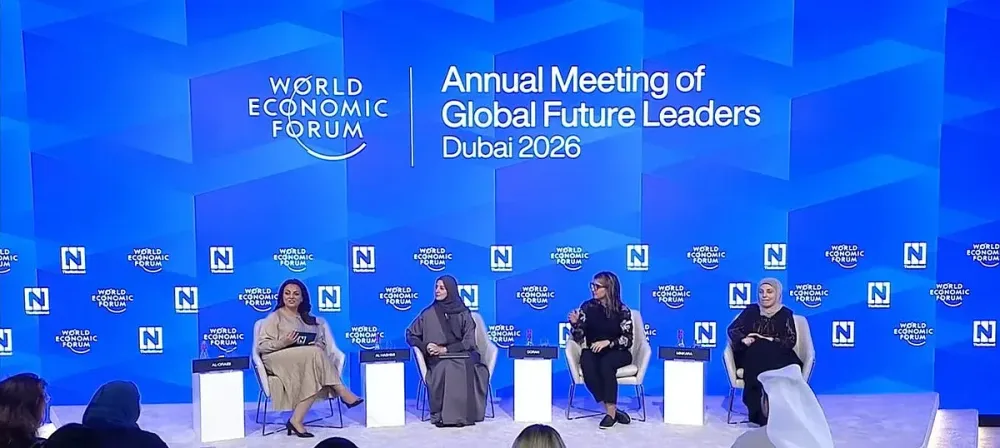
Speaking during the World Economic Forum's "Fair by Design" panel discussion, Sara Minkara, founder and CEO of Sara Minkara, LLC and former US Special Advisor on International Disability Rights, said AI systems risk reproducing existing workplace discrimination unless accessibility and disability inclusion are incorporated from the outset.
She warned that some automated video interview systems evaluate candidates based on assumptions about how individuals should communicate, potentially disadvantaging people with visual, speech or other disabilities.
Minkara also referred to research suggesting that AI-based screening tools may treat applicants differently when disability-related information appears on otherwise identical CVs.
AI could reinforce existing workplace barriers
Minkara said the problem extends beyond technology to longstanding societal perceptions of people with disabilities.
She argued that people with disabilities are often viewed through the lens of charity or vulnerability rather than being recognised for their professional expertise, leadership potential and economic contributions.
These attitudes, she explained, can influence how recruitment systems are designed and how employers assess candidates.
Minkara called for disability inclusion to be considered throughout the design, implementation, testing and monitoring of AI systems.
She also warned that organisations auditing AI for bias frequently focus on gender and race while overlooking disability.
Only 6% of surveyed companies reported disability representation on boards
Citing research involving 410 self-selected companies, Minkara said only 30 per cent reported having at least one senior executive with a disability.
Meanwhile, just 6 per cent reported having a person with a disability on their corporate board.
She argued that increasing disability representation in senior management and boardrooms would help ensure that investment decisions, workplace policies and emerging technologies reflect a broader range of perspectives.
Minkara also cautioned against relying solely on employment quotas, saying compliance requirements do not necessarily lead to meaningful workplace inclusion.
UAE official proposes AI-powered career support for women
Huda Al Hashimi, Deputy Minister of Cabinet Affairs for Strategic Affairs and member of the UAE Gender Balance Council, said artificial intelligence could help organisations create fairer career pathways by connecting education, employment and professional development.
She proposed exploring an agentic AI-powered system that could support women throughout their careers, helping them identify opportunities and navigate challenges associated with family and caregiving responsibilities.
However, Al Hashimi stressed that human judgment should remain central to recruitment.
She said organisations should use AI to connect opportunities and support career progression rather than relying entirely on automated hiring decisions.
UAE women's leadership representation reaches 33%
Al Hashimi also highlighted progress in women's representation across UAE government ministries.
She said women now account for approximately 33 per cent of leadership positions, compared with around 15 per cent in 2017.
The increase, she explained, was achieved through greater transparency, institutional accountability and consistent monitoring rather than mandatory quotas.
She added that women's representation on the boards of UAE public joint-stock companies had increased from approximately 3 per cent six years ago to 15 per cent.
Cisco highlights the importance of inclusive workplace policies
Kelsi Doran, Vice President at Cisco, said organisations must build inclusion into their workplace culture, policies and employee benefits.
She highlighted parental leave policies, flexible working arrangements and transparent career development opportunities as ways to support employees with different needs.
Doran also said AI could expand access to education, entrepreneurship and economic opportunities, provided organisations make the necessary investments in training and skills development.
Disability inclusion must begin at leadership level
Minkara urged companies to create stronger pathways for people with disabilities to join corporate boards and take part in strategic decision-making.
She said representation at leadership level could influence how organisations develop technology, allocate capital and design workplace policies.
She also encouraged managers to regularly ask employees what support they need to perform effectively, rather than assuming that identical workplace arrangements are suitable for everyone.
The panel concluded that fairer workplaces require more than policies or technological solutions, emphasising the importance of accountability, inclusive leadership and ensuring that artificial intelligence does not reinforce existing inequalities.