Pakistan requests $10 billion US Exchange Stabilization Fund facility to strengthen reserves
Islamabad seeks rare bilateral dollar financing mechanism from Washington with up to five-year maturity, aiming to boost forex reserves and reduce reliance on multilateral lenders amid ongoing economic reforms.
Pakistan requests $10 billion US Exchange Stabilization Fund facility to strengthen reserves
Pakistan has formally requested a $10 billion Exchange Stabilization Support Facility from the United States, seeking a rare form of bilateral financial assistance that would significantly bolster the country's foreign exchange position and provide breathing room as it implements economic reforms.
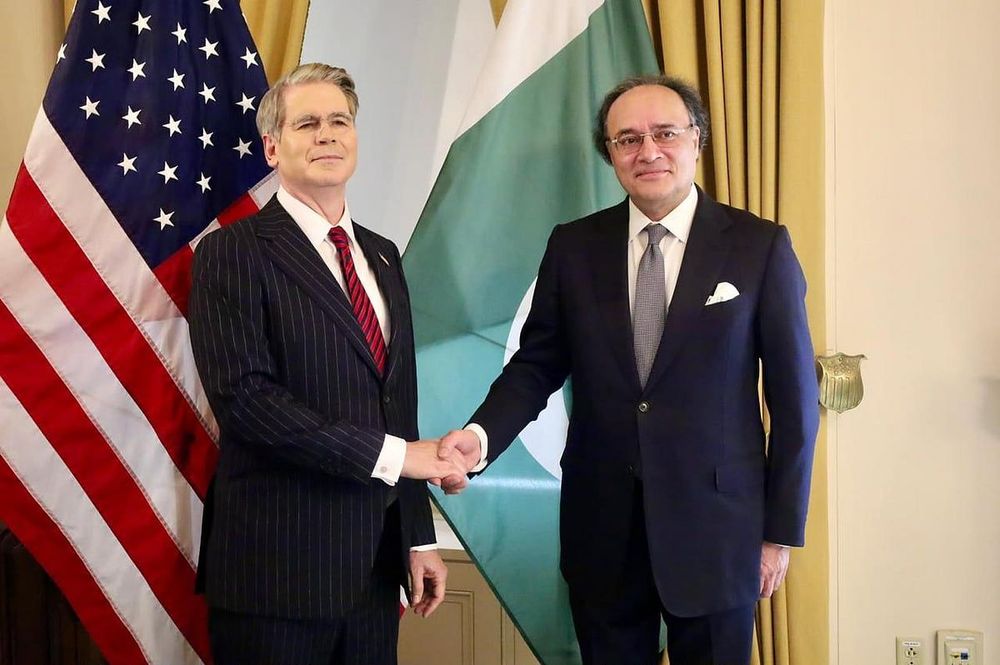
Finance Minister Muhammad Aurangzeb presented the proposal during meetings with US Treasury Secretary Scott Bessent in Washington on Tuesday. Pakistan's embassy confirmed the discussions took place but did not provide details of the request, while the US Treasury declined to comment on the matter.
The proposed facility would function as a bilateral support mechanism with a maturity period of up to five years, providing Pakistan access to dollar financing directly through the US Treasury's Exchange Stabilization Fund. Established under the Gold Reserve Act of 1934, the fund has participated in over one hundred credit and loan arrangements with foreign governments and central banks since 1936, making it a longstanding instrument of US financial diplomacy.
Strategic financial cushion
If approved, the arrangement would help Pakistan increase its foreign exchange reserves, stabilise the rupee against external shocks, ease pressure on external debt repayments, and improve investor confidence in the economy. It would also reduce the country's heavy dependence on multilateral institutions such as the International Monetary Fund.
Pakistan's foreign exchange reserves stood at approximately $22.1 billion in May 2026, with State Bank of Pakistan holdings at around $17.2 billion. While this represents a substantial recovery from the crisis levels of 2023, when reserves fell to just over $3 billion and inflation surged to a record 38 percent, the current reserves provide only about 3.1 months of import cover, below the internationally recommended threshold.
The country is currently implementing a 37-month Extended Fund Facility programme worth $7 billion, approved by the IMF Executive Board in September 2024 after reaching staff-level agreement in July of that year. The programme followed a severe balance-of-payments crisis that brought Pakistan to the brink of default in 2023.
Despite the IMF-backed stabilisation, Pakistan continues to face external financing pressures. The exchange stabilization facility would provide an additional financial buffer, helping the government manage currency volatility and maintain adequate liquidity while implementing structural reforms.
Rare bilateral instrument
Such facilities are exceptionally uncommon. In October 2025, the US Treasury approved a $20 billion currency swap arrangement with Argentina's central bank using Exchange Stabilization Fund resources, with Argentina having accessed $2.5 billion through the swap line by the end of that month. Before Argentina, Uruguay received a similar arrangement in 2002, highlighting how infrequently Washington extends this type of bilateral support.
The Exchange Stabilization Fund held total assets of $218 billion with a net position of $43.6 billion at the end of 2025, providing the US Treasury Secretary with substantial discretionary resources for foreign financial support operations. Historical precedent includes a $3 billion loan facility to Mexico during the 1994 peso crisis, demonstrating that the fund has been used before for large-scale bilateral support to countries facing currency instability.
If Washington agrees to Pakistan's request, the facility would rank among the largest bilateral financial support arrangements the United States has ever extended to Islamabad and would send a strong signal of confidence to international capital markets.
Deepening economic partnership
In an official statement, Pakistan's Finance Ministry said Aurangzeb sought expanded US support to improve the country's access to international capital markets, strengthen foreign exchange reserves, and enhance sovereign credit ratings. The statement did not specifically reference the $10 billion facility request.
The proposal comes as Pakistan works to deepen economic ties with Washington beyond traditional security cooperation. Recent engagement has expanded into investment discussions covering mining, real estate, and digital finance. In December 2025 and February 2026, the US Export-Import Bank approved between $1.25 billion and $1.3 billion in financing for Pakistan's Reko Diq copper and gold mining project in Balochistan, part of a $10 billion Project Vault programme aimed at securing critical minerals supply chains.
Pakistan has received 24 IMF bailout programmes since 1958, making it one of the most frequent users of Fund assistance globally. Prime Minister Shehbaz Sharif stated in July 2024 that the current programme should be the country's last, underscoring the government's intent to reduce reliance on multilateral financing and diversify its sources of external support.
Structural vulnerabilities persist
While Pakistan's headline economic indicators have improved under the IMF programme, structural vulnerabilities remain. The country's current account deficit narrowed to just $139 million in fiscal year 2026, but this improvement was driven primarily by record remittance inflows of $41.6 billion rather than export growth. Goods exports actually declined during the year while imports increased, raising sustainability concerns about the external position.
Market analysts note that approval of the proposed exchange stabilization facility would increase the State Bank's reserves, strengthen confidence in the rupee, reduce government borrowing costs, improve Pakistan's sovereign credit profile, and provide reassurance to foreign investors considering entry into Pakistani markets.
The request represents a significant test of US-Pakistan bilateral relations and Washington's willingness to provide substantial financial backing for Islamabad's economic reform agenda. A decision from the US Treasury is expected in the coming months.